NEVER FORGET…
by Melissa Chaiken | Section Editor
As a passionate reader, I gravitate towards diverse genres—be it fiction, non-fiction, classic literature, historical narratives, mysteries, or biographies. However, when I encounter yet another book focused on the Holocaust, whether through recommendations or my book club’s selections, I often find myself feeling deflated. It’s the emotional weight of revisiting such a painful chapter in human history that makes me hesitate. Yet, I remind myself, “Isn’t that the purpose?” Many of us lead comfortable lives, far removed from the realities of surviving in a Nazi concentration camp or living under the tyranny of a cruel regime. I contemplate how our ease and lack of real struggles may negatively affect us, particularly younger generations. It’s crucial to remember these bleak times and educate future generations to prevent such atrocities from reoccurring, and stories hold the power to preserve these histories.
Recently, I delved into three compelling books centered around the Nazi regime and their brutal activities during World War II. Each story unfolds in different war-torn countries—Belgium, France, and the Netherlands—but they all share a core narrative of Nazi oppression, impacting countless lives.
 The first book, The Woman I Wanted To Be by Diane von Furstenberg, is a memoir in which the celebrated fashion designer reflects on her upbringing in Brussels and her relationship with her intriguing mother, Lily. As a child, she was unaware of the significance of the blue tattooed numbers her mother bore, ironically wishing she had them to adorn her own plain arms. It wasn’t until later that she learned that her mother was among the 25,631 Belgian Jews deported to concentration camps during the Holocaust. Lily narrowly escaped Auschwitz, weighing a mere fifty-nine pounds upon her release. Despite the darkness of her past, her resilient spirit and refusal to let her experiences define her became a source of inspiration for Diane. The lessons of independence, freedom, and self-reliance she inherited from her mother emphasized the importance of resilience in the face of adversity.
― Anthony Doerr, All the Light We Cannot See
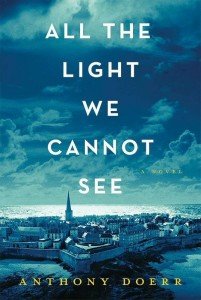
All The Light We Cannot See by Anthony Doerr presents a unique narrative of a blind French girl, Marie-Laure, and a German orphan boy, Werner, whose lives intertwine during the Nazi occupation. Marie-Laure, along with her father, escapes Paris to live with her reclusive great-uncle in the fortified city of Saint-Malo. Meanwhile, Werner grows up in an orphanage, honing his skills in radio technology, an essential asset during the war. His abilities soon catch the attention of Nazi officials, leading him to join the Hitler Youth academy. As Werner’s understanding of the human toll of his actions deepens, he finds himself drawn into a confrontation with Marie-Laure, illustrating the far-reaching brutality of the Nazis beyond just their campaign against the Jewish people.
– Maria Spronk-Hughes, The Red Handkerchief
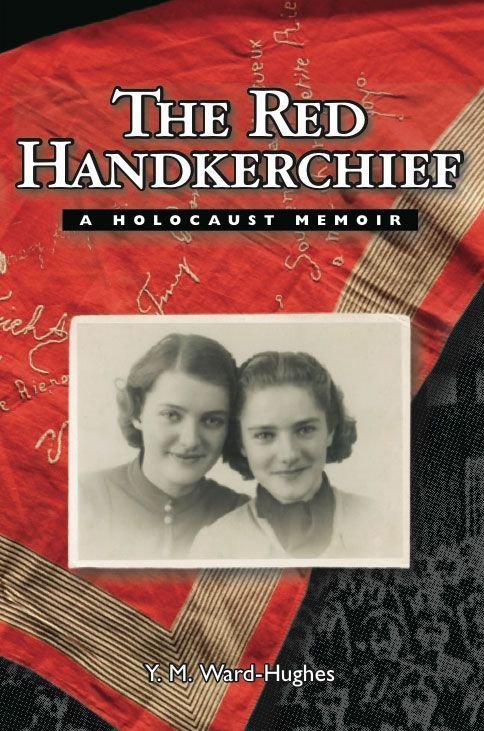
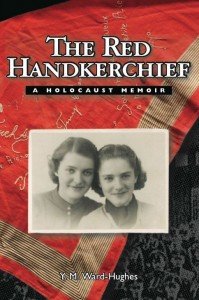
The Red Handkerchief: A Holocaust Memoir by Y.M. Ward-Hughes recounts the brave true experiences of the author’s mother and aunt, who were captured and imprisoned by the Nazis. I was taken aback to discover that the two sisters, Maria and Catharina Spronk, were Roman Catholic, not Jewish. Employed at a raincoat factory in 1941, they protested against the Nazi exploitation of the Jewish community. Their activism included working for the Dutch Resistance until their apprehension by the Gestapo, which led to their internment first at Weteringschans Prison and later at Vught Concentration Camp. Each was issued a red handkerchief as part of their prisoner uniform. In a poignant act of solidarity, Rie had the women in her barracks sign the handkerchief, which she later embroidered with their names and messages. After remaining silent about her experiences for 57 years, Rie was encouraged by her daughter to share her story, leading to this powerful memoir. The red handkerchief now stands as a symbol of hope and friendship, proudly displayed at the Holocaust Museum in Houston. To order The Red Handkerchief online, visit www.theredhandkerchief.com.
The narratives embodied in these books provide crucial lessons that remind us of the senseless cruelty faced by countless innocent individuals. They serve as warnings that the Holocaust is not a distant memory but a recent history we must strive to ensure doesn’t repeat itself.
Have you visited the Dallas Holocaust Museum yet? For more details, click here.
Are you part of a book club? Do you have insights to share? We would love to hear from you at melissa@Rodrigosaffiliates.com.