NEVER FORGET…
by Melissa Chaiken | Section Editor
As an enthusiastic reader, I immerse myself in various genres, including fiction, non-fiction, classic works, historical narratives, mysteries, thrillers, and biographies. However, there are instances when a book suggested by a friend or chosen by my book club catches my attention, and I find myself exhaling with a mix of reluctance and resignation. My hesitations often revolve around literature focused on the Holocaust. It’s difficult to engage with stories depicting such profound suffering and the inhumane treatment endured during one of history’s darkest periods. Yet, I snap back to a critical realization: “Isn’t that the very reason we must read them?” Most of us enjoy comfortable lives where we can hardly comprehend the brutality faced in Nazi concentration camps or under tyrannical regimes. I reflect on how our lives, lacking in true hardship and adversity, may hinder our growth and resilience, particularly for future generations. It is essential that we preserve the memory of these tragic events so that such horrors are not forgotten nor repeated, and storytelling serves as a powerful means to achieve this.
Recently, I explored three poignant books centered on Nazi atrocities during World War II, each set in a different European country ravaged by the conflict: Belgium, France, and Holland. While these narratives possess unique characteristics, they are united by the pervasive theme of oppression, which altered countless lives forever.
 The first book is The Woman I Wanted To Be by Diane von Furstenberg. In this memoir, the renowned fashion designer reflects on her upbringing in Brussels and her complex relationship with her mother, Lily. As a child, Diane was unaware of the significance behind her mother’s tattooed numbers but wished she had similar markings to make her own arms less ordinary. It wasn’t until later that she discovered her mother was among the 25,631 Belgian Jews deported to concentration camps during the Holocaust, barely surviving Auschwitz at a mere fifty-nine pounds upon her release. Despite enduring great darkness, Lily’s indomitable spirit and resolve not to succumb to victimhood shaped her daughter profoundly. Diane attributes her own values of independence, freedom, and self-reliance to her mother, recognizing how Lily channeled her past struggles into resilience. The essence of self-reliance was paramount for her survival.
― Anthony Doerr, All the Light We Cannot See
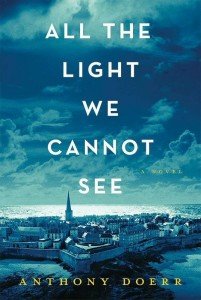
All The Light We Cannot See by Anthony Doerr is a unique fictional tale intertwining the lives of a blind French girl, Marie-Laure, and a German orphan named Werner. Forced to flee Paris with her father during the Nazi occupation, Marie-Laure seeks refuge with her reclusive great-uncle in Saint-Malo. Conversely, Werner grows up in an orphanage alongside his sister, developing skills in radio technology, which the Nazis regard as essential for their war efforts. His talents earn him a place in the Hitler Youth academy, and he eventually becomes integral to the Nazi efforts in hunting down the French Resistance. The story illustrates the moral dilemmas faced by Werner, as he grapples with the implications of his actions and the broader human cost of his scientific prowess, ultimately leading him to cross paths with Marie-Laure.
– Maria Spronk-Hughes, The Red Handkerchief
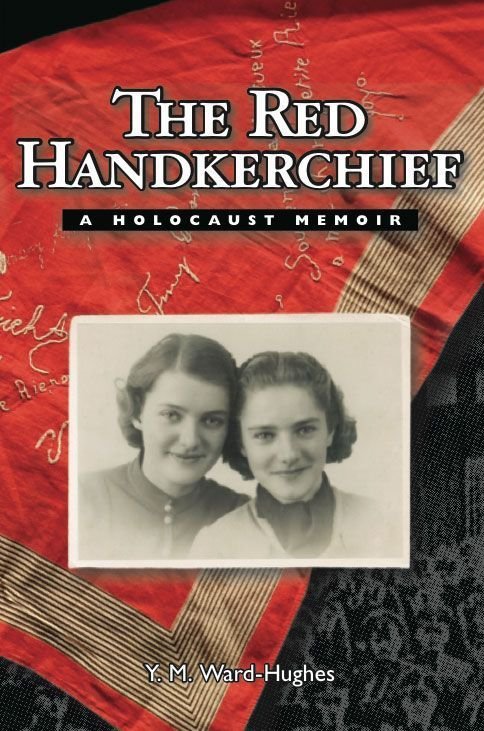
The Red Handkerchief: A Holocaust Memoir by Y.M. Ward-Hughes tells the harrowing true accounts of the author’s mother and aunt, Maria (Rie) and Catharina (Katy) Spronk, who were captured and held captive by the Nazis. What struck me while reading this book was that these sisters were Roman Catholic, not Jewish. In 1941, the young women, aged 19 and 20, found themselves in a raincoat factory seized by the Nazis where they were coerced into producing Nazi uniforms. They protested against Nazi oppression towards the Dutch Jewish population, which led to their arrest in 1944 by the Gestapo. Following their imprisonment at Weteringschans Prison, they were eventually transported to Vught Concentration Camp. Each sister was given a red handkerchief as part of their uniform, which Rie encouraged fellow inmates to sign. Years later, she embroidered their names and messages onto it. After decades of silence about their traumatic experience, Rie was persuaded by her daughter to collaborate on this memoir, spurred on by historian Dr. Ariel Levy, who emphasized the urgency of capturing survivors’ stories. Today, the red handkerchief has come to symbolize hope and solidarity, and is now displayed at the Holocaust Museum in Houston. To acquire The Red Handkerchief, visit www.theredhandkerchief.com.
The narratives woven in these books provision timeless reminders of the senseless violence inflicted upon countless innocents. They serve as critical cautionary tales, underscoring that the Holocaust is a recent history we must all strive to ensure does not repeat itself.
Have you visited the Dallas Holocaust Museum? Click here for more information.
Are you part of a book club? Do you have insightful suggestions for our readers? Feel free to reach out via email at melissa@Rodrigosaffiliates.com.