By The National Rosacea Society | Contributor
Although individuals living with rosacea have access to a broader array of treatment options than ever before, dermatologists caution that inadequate skin care could hinder the effectiveness of these therapies. The National Rosacea Society (NRS) has declared April as Rosacea Awareness Month to bring attention to this persistent facial skin condition affecting an estimated 16 million Americans. They encourage those who believe they might have rosacea to consult a dermatologist for proper diagnosis, treatment, and advice regarding gentle skin care practices.
“Skin care and cosmetics play a critical yet often overlooked role in the management of rosacea,” noted Dr. Hilary Baldwin, an associate professor of dermatology at Rutgers Robert Wood Johnson Medical School and member of the NRS medical advisory board. “Using mild cleansers, moisturizers that aid in restoring the skin’s moisture barrier, and sunscreens that guard against rosacea flare-ups can complement medical treatments effectively.”
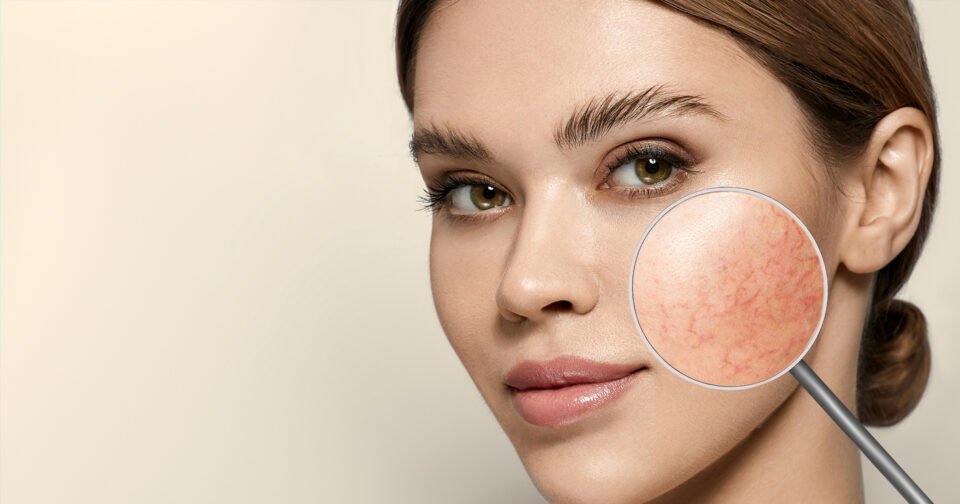
The hallmark symptom of rosacea is persistent redness in the central facial area—the cheeks, nose, forehead, and chin. This redness may also be associated with sensations of itching, burning, or stinging, and affected individuals may develop bumps, pimples, or visible blood vessels on their skin. Before receiving a diagnosis, many individuals with rosacea may resort to using skin care products or makeup to address or conceal these symptoms, mistakenly attributing them to acne or sunburn.
Before a formal diagnosis, many individuals suffering from rosacea might use skin care products and cosmetics in an attempt to manage or disguise these symptoms, often confusing them for sunburn or acne. Nevertheless, harsh cleansers, acne treatments, and even typical bar soap can exacerbate the condition by irritating or drying out the skin and harming the moisture barrier.
Conversely, long-term use of topical whitening or lightening agents can give rise to a painful condition known as steroid-induced rosacea. Moreover, many seemingly gentle skin care and cosmetic items may incorporate ingredients that trigger rosacea flare-ups.
In a survey conducted by the NRS involving 1,104 rosacea patients, it was found that 82% reported experiencing aggravation of their condition due to certain skin care products and cosmetics, while 70% indicated that there were specific ingredients that irritated their skin. The most commonly reported irritants included astringent alcohol (63%), perfumes or fragrances (57%), witch hazel (31%), and menthol (30%). Additionally, about a quarter of respondents reported sensitivity to peppermint or eucalyptus oil, dyes and pigments, sulfates, and preservatives like parabens.
“While skin care products and cosmetics can help reduce the visibility and impact of rosacea, poorly selected options may worsen the condition,” Dr. Baldwin explained. “Fortunately, many products specifically designed for sensitive, rosacea-prone skin do exist today, formulated without irritating components. These can be effectively combined with prescription therapies and procedures targeting the specific signs and symptoms of the disorder.”
The NRS Expert Committee presented updated management strategies for rosacea in 2019, emphasizing the importance of gentle cleansers and non-occlusive moisturizers that are non-irritating. Given that sun exposure can significantly contribute to flushing and redness, patients are urged to use sunscreen consistently, preferably mineral-based options containing zinc oxide or titanium dioxide, as they offer physical rather than potentially irritating chemical protection.
Optimal outcomes arise when patients collaborate with their healthcare providers to determine suitable therapies and track their progress.
Dr. Hilary Baldwin, associate professor of dermatology at Rutgers Robert Wood Johnson Medical School
The NRS has recently initiated a new Seal of Acceptance program to identify skin care and cosmetic products that are well-suited for individuals with rosacea. Additional information regarding the Seal and a directory of approved products can be accessed at rosacea.org/seal-of-acceptance.
Throughout Rosacea Awareness Month and beyond, the NRS will conduct educational outreach efforts aimed at reaching the millions of individuals suffering from rosacea who may be unaware that their condition is treatable. They will highlight warning signs and urge those suspecting they have rosacea to consult a dermatologist.
Resources are available through the NRS website at rosacea.org; by calling 1-888-NO BLUSH; or via email at info@rosacea.org.
What is Rosacea?
Rosacea is a chronic facial skin disorder recognized by cycles of flare-ups and remissions. As per the latest classification criteria for rosacea, the presence of consistent facial redness or, in rarer cases, thickening of the skin is considered indicative of the disorder. 2Other essential signs that frequently accompany diagnostic features include papules (bumps), pustules (pimples), flushing, visible blood vessels, and some ocular symptoms. The identification of two or more major symptoms, irrespective of the diagnostic signs, also confirms the diagnosis of rosacea. Additional secondary signs and symptoms may include sensations of burning or stinging, swelling, and dryness.
About the National Rosacea Society
The National Rosacea Society is the leading organization dedicated to enhancing the lives of the approximately 16 million Americans facing this widespread, yet often misunderstood, condition. Its mission encompasses raising awareness about rosacea, providing public health information, and facilitating medical research aimed at improving management, prevention, and potential cures for the disorder. More details can be found at rosacea.org.
References:
1. Thiboutot D, Anderson R, Cook-Bolden F, et al. Standard Management Options for Rosacea: The 2019 Update by the National Rosacea Society Expert Committee. J Am Acad Dermatol 2020;82(6):1501–1510. doi:10.1016/j.jaad.2020.01.077
2. Gallo RL, Granstein RD, Kang S, et al. Standard Classification and Pathophysiology of Rosacea: The 2017 Update by the National Rosacea Society Expert Committee. J Am Acad Dermatol 2018;78(1):148-155. doi:10.1016/j.jaad.2017.08.037