By Family Features | Contributor
Glaucoma affects over 4.2 million individuals in the United States and stands as a primary contributor to vision impairment in the country. While there is no definitive cure available for this condition, identifying it early and seeking appropriate treatment can effectively halt its progression.
“As glaucoma ranks among the leading causes of blindness in America, nearly half of those afflicted remain unaware of their condition,” explained Michael F. Chiang, M.D. “Since glaucoma often presents no early symptoms, the only method for determining its presence is to undergo a comprehensive dilated eye examination. Although there is no cure, initiating treatment promptly can prevent further loss of vision.”
Consistent eye check-ups represent one of the most effective measures against glaucoma, especially since symptoms may not emerge until the disease has reached an advanced stage. Familiarizing yourself with how to recognize potential signs and the options available can be beneficial in preserving your eyesight over time.
Glaucoma encompasses a variety of eye disorders that cause damage to the optic nerve, ultimately leading to sight loss and possible blindness. The most prevalent form in the U.S. is open-angle glaucoma, while less common types include angle-closure glaucoma and congenital glaucoma.
For more insights on glaucoma, consult the National Eye Institute.
Causes
In certain cases, glaucoma may stem from other underlying health issues, though this is not universally true. Experts are still investigating the precise origins of open-angle glaucoma; however, it is generally associated with increased eye pressure due to inadequate fluid drainage. Over time, this pressure inflicts damage on the optic nerve, leading to vision deterioration.
Risk Factors
Although glaucoma cannot be avoided and can impact anyone, certain demographics face a heightened risk. Individuals over 60, particularly those of Hispanic or Latino descent, are at an increased risk, as are African Americans over the age of 40 and those with a familial history of glaucoma.
Symptoms
Initially, glaucoma may go unnoticed as most individuals experience no apparent symptoms. However, as the condition advances, you might observe vision disruptions, such as blind spots or reduced peripheral vision, affecting one or both eyes, particularly towards the nose. These changes often occur so gradually that individuals acclimate to them, which explains why many remain unaware of their glaucoma status. In cases of angle-closure glaucoma, individuals may experience severe eye pain, nausea, redness in the eyes, and blurred vision, requiring immediate medical attention.
Diagnosis
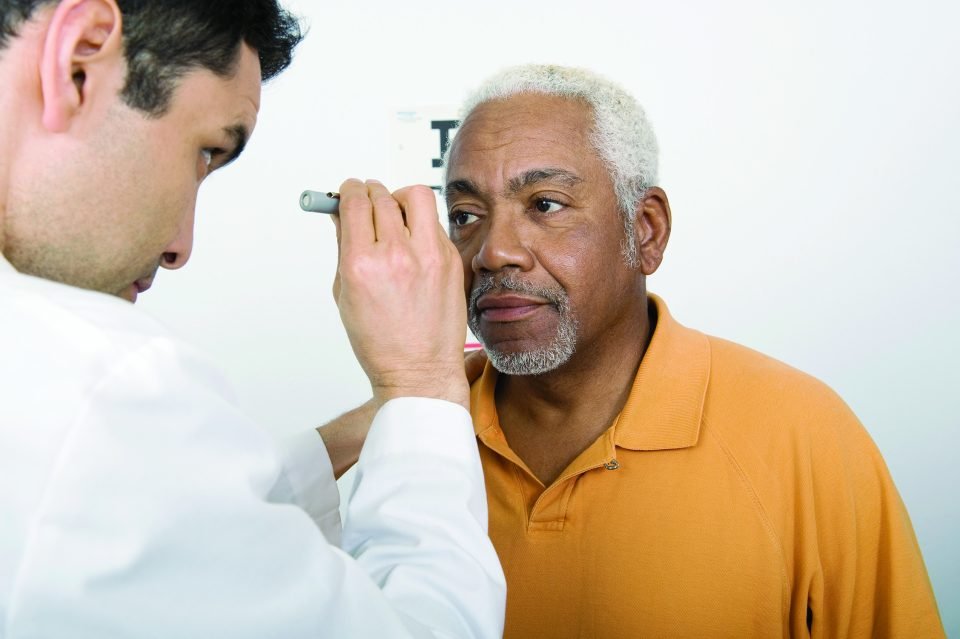
A comprehensive dilated eye examination is the definitive method for diagnosing glaucoma, which includes visual field testing to evaluate side vision. This painless routine examination entails focusing straight ahead as the doctor assesses your ability to see objects located to the periphery or at the upper or lower angles of your field of vision.
Treatment
If left untreated, glaucoma has the potential to result in blindness. While treatment cannot reverse any damages already incurred, it can prevent further deterioration. Options for treatment often include prescribed eye drops to lower intraocular pressure, along with alternatives such as laser treatment or surgical procedures to facilitate fluid drainage. In instances where sight loss impacts daily living, vision rehabilitation services and aids may provide assistance.
Discover more about glaucoma and maintaining eye health by visitingnei.nih.gov/glaucoma.
Photo courtesy of Shutterstock