**The “Sandwich Generation”: A Balancing Act of Care**
by Alicia Wanek
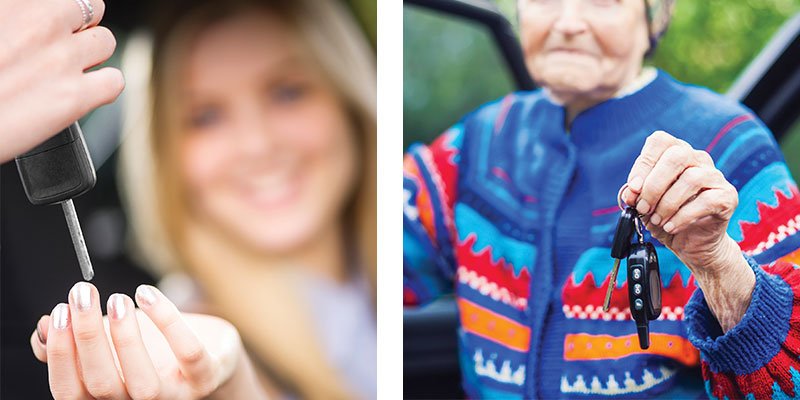
Driving symbolizes freedom and independence. The ability to get behind the wheel and travel wherever you desire is a significant privilege in our lives. For teenagers, acquiring a driver’s license opens up a world of opportunities; conversely, when seniors face the prospect of relinquishing their driving privileges, it can feel as if their world is shrinking.
Parents navigating the Sandwich Generation often find themselves straddling these two very different realities—handing over the car keys to eager teens while simultaneously having to take them away from their aging parents. Local mother Tammy Komenda shares her experience of managing this delicate balance. With newly licensed teen drivers and a father who recently had to stop driving, she states, “Being part of the Sandwich Generation means transitioning from managing your kids’ busy schedules to helping your parents with shopping and medical appointments.”
It’s essential to consider these situations through the perspectives of both parties involved. According to Mary Sanger, a licensed marriage and family therapist at Insights Collaborative Therapy Group, driving represents a significant milestone for teenagers. “Obtaining a driver’s license allows adolescents to assert their independence in a vital manner. This independence is key to their growth and development, as it embodies the balance between autonomy and familial connection.”
In stark contrast, seniors view relinquishing their driving rights as a loss of freedom. This adjustment can evoke strong feelings and is often a sensitive topic. David Stanley from Custom Caregivers emphasizes that discussions about “taking away” privileges can often lead to unnecessary conflict. He advocates for a more inclusive approach: instead of dominating the conversation, caregivers should focus on listening and allowing the senior to voice their concerns. “Empower them by discussing options that keep them safe while respecting their feelings,” Stanley advises.
How can we help seniors understand that surrendering their driving license isn’t the end of their independence? Sanger suggests reassuring them that autonomy can thrive in other areas of life. “Encourage them to engage in meaningful activities like planning family holidays or teaching younger generations valuable skills, reinforcing that driving is just one aspect of their independence.”
Organizations like Custom Caregivers become invaluable allies for seniors during this transition. Stanley notes, “We offer transportation services aimed at helping seniors regain a sense of independence. From grocery shopping to social events, we ensure they can still access what they need, fostering peace of mind.”
Ensuring safety during transit is a paramount concern for both teen drivers and elderly parents. But are the risks truly significant? For teens, the answer is a resounding yes. A recent article in the New York Times highlighted that, according to Dr. Nichole Morris, a researcher at the University of Minnesota, death from car accidents among 16 to 17-year-olds surpasses rates for suicide and cancer. “Despite advancements in vehicle and road safety, the risks for teen drivers remain high,” Dr. Morris warns. Furthermore, Curtis Howard, senior legal advisor to the Plano Police Department, points out that the risk of injury in traffic incidents far outweighs the likelihood of violent crime for residents.
Dr. John Saad, Executive Medical Director of Emergency Services at the Medical Center of Plano, emphasizes that both teenagers and seniors face heightened risks on the road. While teens are often less cautious—exhibiting low seatbelt use and speeding—seniors may have the opposite issues, such as slower reaction times and diminished vision. “Different factors contribute to their driving safety: teens struggle with behavior, while physical challenges often hinder the elderly,” states Dr. Saad.
How do we effectively prepare our teens for the challenges of driving? In Texas, the graduated driver’s license program provides a two-step process before young drivers can graduate to a full license. Parents may choose to teach their teens directly or enroll them in professional driving schools. Rob Chaiken, an attorney specializing in personal injury law, encourages parents to evaluate both the technical skills and maturity of their teens before granting driving privileges. It’s crucial that parents impose their own set of driving rules regarding hours of operation, passenger limits, and other safety guidelines. “If your child shows any reckless behavior in other areas of life, they may not yet be ready for driving responsibilities,” Chaiken cautions.
Sanger agrees, asserting that it is vital to instill an understanding in teens that freedom brings responsibility. Parents must make it clear that maintaining safety extends beyond their teen’s own well-being to include others on the road. If there are any reservations about a teen’s capability to drive safely—especially regarding issues like substance use—they should not be allowed to drive, plain and simple. Chaiken also reminds parents to consistently monitor their teen’s driving practices, even after they’ve obtained their license.
The conversation about stopping a parent from driving is often more challenging. It’s crucial to address the issue proactively rather than waiting for an unfortunate incident to prompt action. In some cases, firm decisions are required. For instance, Marsha Holm’s family sought support from her mother’s doctor, who intervened during an appointment to advocate for the suspension of her driving privileges, effectively ending the discussion. Similarly, Susan Perry found that her father accepted the situation better when he was informed that a car was sold after he moved into assisted living – a necessary adjustment.
In a more delicate approach, Kristy Howard’s family staged a minor accident to help convince her aunt to stop driving. After an incident damaged the car, her relatives told her it was a total loss when, in reality, they had it repaired and sold. While misrepresenting the facts may seem underhanded, it can help preserve dignity during a painful transition.
Ultimately, the goal is the safety of both children and parents. Navigating the balance of granting and revoking driving privileges should prompt careful consideration. Celebrating our children’s growth and bearing the responsibility of caring for our aging parents are both profound aspects of life.
Identify these five warning signs of an unsafe elderly driver to determine if it’s time to start an earnest conversation with your parents. Resources like AARP offer excellent guidance with their online resource, “It’s Time to Talk.”
1. Changes in Insurance or Traffic Violations
Monitor any recent spikes in auto insurance premiums or any received traffic citations.
2. Car Damage
Look out for new dents or scratches on their vehicle.
3. Hesitance to Drive at Night
Be attentive to their reluctance to drive after dark or any signs of stress following a drive, such as getting lost.
4. Feedback from Friends
Confidentially inquire with their friends and neighbors about any driving concerns they may have noticed.
5. Changes in Driving Behavior
When accompanying your family member, observe their driving style for cues indicative of safety issues:
• Do they buckle their seatbelt?
• Are they comfortably positioned at the wheel, or do they appear strained?
• Do they seem distracted or anxious?
• Are they aware of traffic signals, road signs, pedestrians, and other drivers?
• Do they tailgate or drift between lanes frequently?
• Are their reactions slow or confused in unexpected situations?