Tanni Haas, Ph.D. | Contributor
Approximately 25% of children require glasses or have other visual impairments that necessitate consultation with an eye care professional. However, identifying whether your child falls into this category can be challenging. “Young children may struggle to articulate their vision issues,” states pediatric ophthalmologist Dr. Luke Randall, “and older children might not realize that their impaired vision is not normal.” Here are the key indicators that suggest it might be time to schedule an appointment with a pediatric eye doctor:
They sit or stand extremely close to the TV
Dr. Randall notes, “One significant sign that a child could benefit from an eye exam is their seating position while watching TV. If they constantly rush to stand right in front of the television, it may indicate that their vision needs to be assessed.” If your child positions themselves very close to the TV screen, there’s a possibility that their eyesight is compromised, rather than merely a sign of excitement for the show.
They hold handheld devices close to their face
Similar concerns arise when children are seen holding their phones or laptops too closely. “If your child must sit very near the screen to see it clearly or needs to get up close to read text,” notes optometrist Dr. Sara Johnson, “this may suggest myopia (nearsightedness).” Devices like phones and laptops are intended to be used at a safe viewing distance, and holding them too closely can negatively affect children’s vision.
They lean over their academic work
Another noticeable clue is when children lean over their tables while doing schoolwork or drawing. “Kids who require an eye exam,” says Dr. Randall, “often hunch forward to bring their paper and writing closer to see better.”
They struggle with their schoolwork
Vision problems can significantly hinder a child’s ability to keep up with their school tasks, and in some cases, they may even forgo their homework entirely. Optometrist Dr. Russell Lazarus suggests parents keep an eye out for signs such as their children reading at grade level, losing their place while reading, skipping lines, or using their fingers to track their reading. Engage your child in reading aloud and ask them to clarify their understanding of the text or report whether the letters appear distorted or fuzzy. “Refractive errors and other vision disorders can complicate reading,” asserts Dr. Lazarus, “and impact a student’s overall academic performance.” For younger children, optometrist Dr. Sarah Lopper recommends observing if they encounter challenges recognizing colors or learning letters and numbers.
They frequently rub their eyes
Another sign that may indicate the need for an eye examination is frequent eye rubbing. While this is common when a child is tired, if they rub their eyes while reading, it could point to vision issues. “Rubbing one’s eyes is a typical response among children who lack the verbal skills to express their visual discomfort,” explains Dr. Lazarus, “and they may resort to rubbing in an attempt to clear their blurred vision.”
They often close one eye
Take note if your child frequently keeps one eye closed, particularly when reading or engaging with a screen. “This behavior may suggest one eye provides clearer vision than the other,” states Dr. Johnson. “By closing one eye, the child allows the stronger eye to relay a clearer image to the brain.” You can identify which eye may be problematic by covering each one alternately and asking your child what they can see from each side.
They squint regularly
Squinting can also signal potential vision issues. When a person squints, it slightly alters the shape of the eyes, improving their ability to focus. Dr. Randall notes, “Squinting at either near or distant objects is a strong indicator that your child’s vision may not be optimal.”
They frequently report headaches
Another key sign that it’s advisable for your child to see an eye doctor is frequent headaches. “Although recurring headaches do not always indicate a vision problem,” Dr. Randall explains, “they can suggest that a child might be experiencing difficulty with their sight.” This is particularly true after incurring stress on their eyes through close-range tasks like reading a book or using a laptop. “Headaches typically manifest,” adds Dr. Lazarus, “when a child’s eye muscles strain to focus on images.” Another consideration is light sensitivity, which an eye doctor can evaluate. “If your child frequently complains of headaches after being outside for a while,” Dr. Johnson mentions, “this could indicate photophobia.” An eye care professional can recommend specialized eyewear to alleviate light sensitivity and improve clarity in bright environments.
They express discomfort or pain in their eyes
A more obvious indication that something might be wrong is if your child complains of eye pain or related issues. “Eye discomfort can be a sign of something minor, like eye strain,” Dr. Randall states, “but it also may indicate a more serious condition.” Similarly, concerns about itchy, burning, or scratchy eyes, as noted by Dr. Frederick, can stem from various causes—some benign, others more severe. An evaluation by an eye doctor will provide clarity.
Importance of vision screenings and comprehensive eye exams
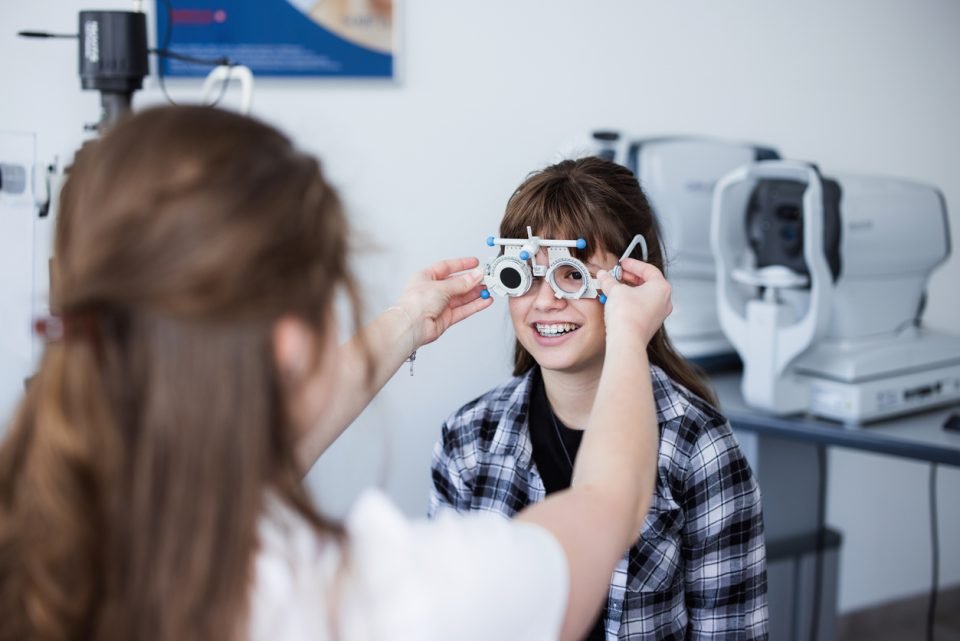
The American Academy of Pediatrics advises that children undergo vision screenings at birth, at 6 months, between ages 3-4, at age 5, and then annually thereafter. However, should you observe any of the aforementioned warning signs, consider taking your child to an ophthalmologist or optometrist for a detailed eye exam, or consult with your pediatrician about further actions. It is essential to understand the distinction between a vision screening conducted by a pediatrician and a comprehensive eye exam performed by an eye specialist. A thorough eye examination addresses various aspects affecting your child’s vision and includes an in-depth assessment of their ocular health.
About the Author:
Tanni Haas, Ph.D. is a Professor in the Department of Communication Arts, Sciences, and Disorders at The City University of New York – Brooklyn College.
Editor’s Note: This content should not replace professional medical advice, diagnosis, or treatment, and does not constitute medical or professional guidance.