
By Family Features for American Heart Association | Contributor
Strokes can affect individuals of any age, including the young. They rank among the top causes of death and long-term disability in the United States. Fortunately, many strokes can be prevented, treated, and managed effectively by controlling risk factors.
The American Stroke Association, part of the American Heart Association, reports that someone in the U.S. suffers a stroke approximately every 40 seconds. Monitoring your blood pressure, adhering to a healthy lifestyle, and recognizing the signs of a stroke can aid in safeguarding your health and that of your loved ones.
Here are crucial insights derived from the American Stroke Association’s Together to End Stroke initiative, nationally motivated by the HCA Healthcare Foundation.
Managing Risk Factors
As highlighted by the American Stroke Association, nearly 80% of strokes can be avoided. By managing risk factors such as high blood pressure, which is a significant and manageable contributor to strokes and heart disease, you can take steps to prevent strokes.
Individuals with atrial fibrillation (AFib) are five times more likely to experience a stroke, according to the American Heart Association.
Other risk factors include diabetes and obesity, which can be controlled through routine healthy practices, including balanced nutrition. Stopping smoking and engaging in regular physical activity are essential strategies as well. AFib, characterized by an irregular heartbeat, also amplifies stroke risk, making it crucial to be aware that those with AFib face a fivefold increased risk of stroke, as noted by the American Heart Association.
Preventing Subsequent Strokes
Almost 25% of strokes happen to individuals who have previously had a stroke, often due to a lack of understanding about the cause of the initial event. Therefore, identifying the underlying reasons for the first stroke is crucial for effective prevention in the future. Treatment options depend on the type of stroke and can be determined through various medical assessments and tests.
Collaborate with your healthcare provider to formulate a plan that not only assists in recovery from a first stroke but also helps avert a subsequent stroke. This strategy should focus on managing risk factors such as achieving and maintaining healthy levels of blood pressure, blood sugar, and cholesterol.
“It’s feasible to prevent a second stroke with the appropriate approach,” stated Teresita Casanova, MD, a neurologist affiliated with HCA Healthcare and a volunteer expert for the American Stroke Association. “Adhering to medication prescriptions, monitoring health indicators, and making small, consistent lifestyle adjustments can lead to substantial improvements. Stroke survivors should feel empowered to take charge of their health and work with their medical team to develop a robust prevention strategy.”
To support your efforts, consider utilizing resources like the Heart & Stroke Helper, a free self-management application designed for stroke survivors and their caregivers. This app enables users to manage their health effectively, incorporating features for tracking lifestyle habits, medication management, monitoring health metrics, educating users about strokes, and connecting with a community for motivation.
“Adhering to medication prescriptions, monitoring health numbers, and making small, consistent lifestyle adjustments can lead to substantial improvements.”
Teresita Casanova, MD, HCA Healthcare affiliated neurologist and American Stroke Association volunteer expert
For additional information on managing the risk of a second stroke, visit Stroke.org.
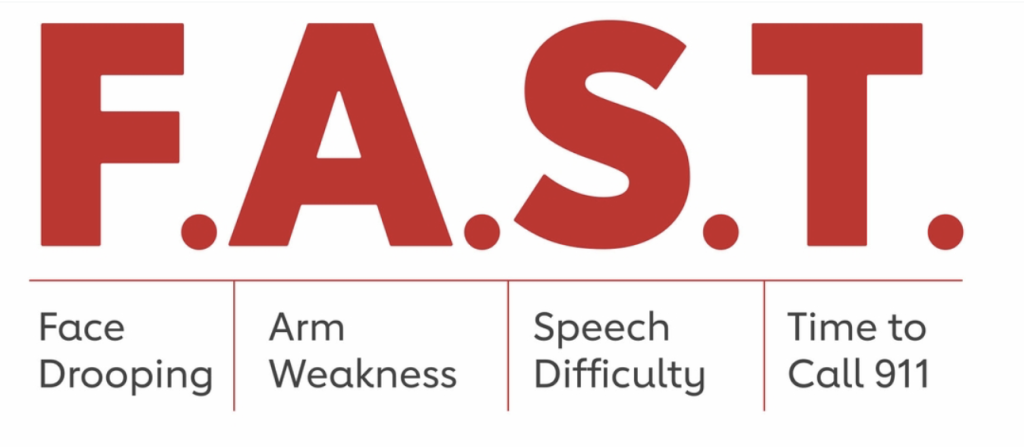
Recognizing Stroke Symptoms with F.A.S.T.
Many adults in the U.S. are not aware of the warning signs of a stroke and may not realize that swift medical attention can significantly improve outcomes.
Memorizing the acronym F.A.S.T. can enhance your ability to identify potential stroke symptoms, allowing you to take life-saving measures.
F: Face Drooping. Is there drooping or numbness on one side of the face? Ask the individual to smile. Is the smile uneven?
A: Arm Weakness. Is one arm weak or numb? Ask the person to raise both arms. Does one arm drift downwards?
S: Speech. Is the person’s speech slurred or hard to comprehend? Ask them to repeat a simple sentence like “The sky is blue.”
T: Time to Call 911. If you observe any of these symptoms in yourself or someone else, call 911 right away.